Veterans can become social workers in California by earning a BSW or MSW, completing supervised post-degree hours, and passing the California licensing exam. Military experience — including counseling, leadership, and crisis response — directly prepares you for the work. The VA alone employs more than 17,000 social workers nationwide, making it one of the largest social work employers in the country.
Sometimes, it’s hard to put an experience into words. Maybe you had to be there. Maybe it would take too long to tell the whole story. Or maybe it’s just simply too dark to share. You tell yourself to clam up, grit your teeth, and move on. Many veterans transitioning back to civilian life have this inner dialogue every day — even at the cost of their physical and mental health.



That’s why social workers with military experience are so important to the field. They don’t just empathize. They understand. They understand the frustrations of jumping through limitless hoops just to get help. They understand why people build walls and become disillusioned. Whether veteran social workers are serving other veterans or the general public, that understanding is the foundation for building real trust — and getting people the help they actually need.
If you’re a veteran considering a career in social work, you’re not starting from scratch. You’re starting with something most people spend years trying to develop. This guide walks you through the transition path — degree options, licensing steps, where veterans work in California, and how to use the benefits you’ve already earned to fund your education.
Your Path from Service to Social Work
The transition from military service to social work is more direct than most veterans realize. The skills that made you effective in the field — reading people under pressure, navigating bureaucracy, managing crisis — are exactly what social work demands. What you need is the credential that lets you put those skills to work professionally.
Here’s how the path breaks down:
Step 1: Choose Your Degree
A Bachelor of Social Work (BSW) qualifies you for entry-level positions in case management, community services, and government agencies. A Master of Social Work (MSW) opens the door to clinical roles, supervisory positions, and the Licensed Clinical Social Worker (LCSW) credential, which allows independent practice. Most veterans targeting the VA or CDSS aim for the MSW. Many California universities offer advanced-standing MSW programs for students who already hold a BSW, cutting the degree to one year.
Step 2: Complete Supervised Field Hours
To become a Licensed Clinical Social Worker in California, you need approximately 3,000 hours of supervised post-degree experience, as currently required by the California Board of Behavioral Science (BBS). Your MSW field practicum provides required clinical training but does not replace the post-degree supervised hours required for licensure. Military experience may strengthen your application, but supervised clinical hours must meet California BBS requirements — contact the BBS directly for guidance on how your service record applies.
Step 3: Pass the California Licensing Exam
California requires candidates to pass the Association of Social Work Boards (ASWB) Clinical Exam and the California Law and Ethics Exam administered by the BBS. Some GI Bill programs may reimburse licensing or testing fees, but coverage varies — check with your VA education benefits counselor. Once licensed, you’re eligible to practice independently, open a private practice, or pursue supervisory clinical roles.
Step 4: Find Your California Employer
The VA operates more than 30 Vet Centers and multiple medical centers across California — all major employers of MSW-level social workers. The California Department of Social Services (CDSS) runs 58 county agencies statewide, and veterans receive hiring preference over other candidates for government social service positions. Military social work roles also exist within active duty installations, the California National Guard, and nonprofit organizations serving veteran populations.
To find the best programs for veterans in California — including schools with Yellow Ribbon participation, military-friendly support services, and advanced standing tracks — explore our curated list of military-friendly social work programs.
General Resources for Veteran Social Work Students
The US Department of Veterans Affairs (VA)
The VA isn’t just a funding source — it’s one of the largest social work employers in the country. With over 17,000 MSW-level social workers on staff, the VA is the single most important career destination for veterans entering the field. Beyond employment, the VA administers most of the financial benefits you can use to fund your education — from GI Bill programs to housing stipends and reduced insurance rates.
The California Department of Veteran Affairs (CalVet)
If you need help understanding, applying for, or maximizing your educational benefits, CalVet is your starting point. They have offices in most California counties, run programs specifically for veteran college students, and offer a wide range of online services for benefits navigation.
California Department of Social Services (CDSS)
The CDSS oversees 58 county social service agencies responsible for child welfare, housing assistance, and mental health services across California. Veterans who apply for government social service positions receive hiring preference over other candidates — a meaningful advantage when entering a competitive field.
Council on Social Work Education (CSWE)
The CSWE accredits bachelor’s and master’s social work programs across the country. CSWE accreditation matters because California requires an MSW from a CSWE-accredited school to qualify for LCSW licensure. Most social service agencies, including the VA and CDSS, also prefer or require applicants to hold degrees from accredited programs.
The California Chapter of the National Association of Social Workers (NASW)
As the largest professional organization in the field, the NASW shapes social work policy, sets ethical standards, and keeps practitioners informed. Through the California Chapter, you can connect with local advocacy efforts, find continuing education opportunities, and access resources specific to social workers serving veteran populations.
Federal Military Education Benefits
Post-9/11 GI Bill (Chapter 33)
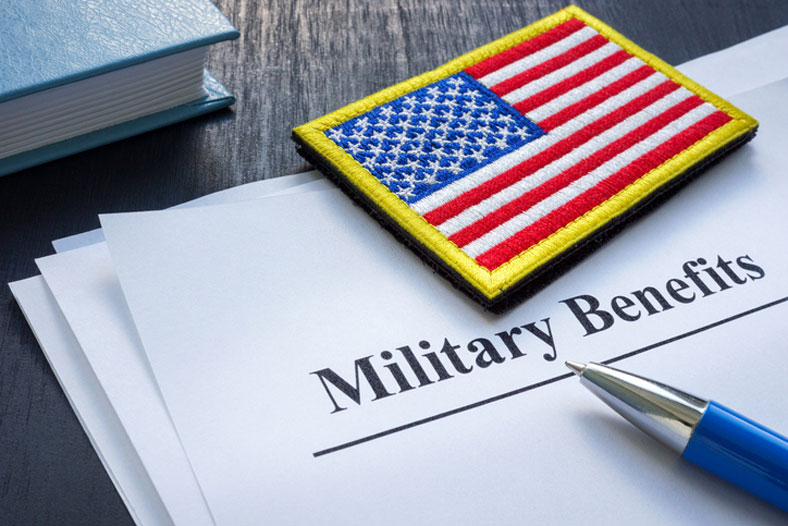
The Post-9/11 GI Bill is the most flexible and widely used education benefit for veterans pursuing a BSW or MSW. It can cover tuition and fees, housing, moving expenses, books, and school supplies. Some GI Bill programs may also reimburse licensing or testing fees, but coverage varies — check with your VA education benefits counselor. If you’ve served 90 days on active duty on or after September 11, 2001, you can use this benefit while still on active duty.
Eligibility requires at least 90 days of active duty service after 9/11, a Purple Heart discharge, or at least 30 continuous days of active duty before an honorable discharge due to a service-related disability.
Montgomery GI Bill — Active Duty (MGIB-AD)
The MGIB-AD covers many of the same costs as the Post-9/11 Bill, but is capped at 36 months of benefits and typically expires after separation — exact timelines depend on discharge date and program rules. Eligibility depends on length of service, years served, and pay reductions during service. Applicants must hold a high school diploma, GED, or 12 college credit hours.
Montgomery GI Bill — Selected Reserve (MGIB-SR)
The MGIB-SR provides up to 36 months of education and job training assistance to members of the Air Force, Army, Coast Guard, Marine Corps, and Navy Reserves, as well as the Air and Army National Guards. To qualify, you must commit to serving at least six years in the Selected Reserve, remain in good standing, complete initial active duty training, and hold a high school diploma or GED.
Which GI Bill Program Is Right for Me?
GI Bill benefits are paid monthly, with amounts calculated based on length of service, enrollment load, and in-state tuition averages. For most veterans pursuing a full-time MSW, the Post-9/11 Bill offers the most value — but the right choice depends on your situation. The VA’s GI Bill Comparison Tool lets you compare schools and benefit options side by side. CalVet counselors and school VA representatives can also help you identify which program maximizes your total aid.
State and School-based Financial Aid Programs for Veterans
Yellow Ribbon Programs
The Post-9/11 GI Bill may not cover the full cost of a private or out-of-state program. Yellow Ribbon schools address this gap by waiving a portion of tuition — and the VA matches that waiver dollar-for-dollar. A school that waives $5,000 effectively becomes $10,000 less expensive when combined with the VA match. In some cases, Yellow Ribbon coverage can eliminate out-of-pocket tuition entirely.
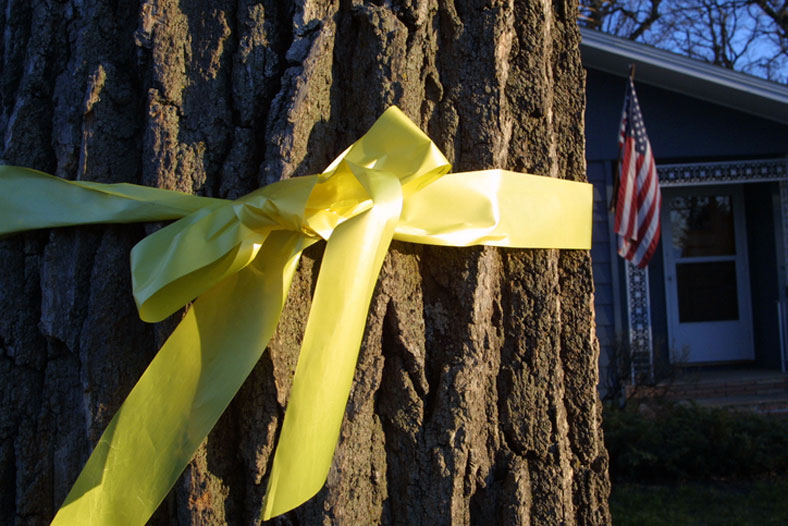
California is home to several CSWE-accredited Yellow Ribbon schools offering bachelor’s and/or master’s degrees in social work:
- Azusa Pacific University
- California Baptist University
- Fresno Pacific University
- La Sierra University
- National University
- Pacific Union College
- Point Loma Nazarene University
- Touro University Worldwide
- University of California at Berkeley
- University of Massachusetts Global
- University of the Pacific
- University of Southern California
- Whittier College
The CA Community Colleges (CCC) Program
This program allows many California veterans to attend California Community Colleges (CCC), California State Universities (CSU), and University of California (UC) campuses at little to no cost. Many of these campuses have dedicated Veteran Resource Centers and grant veterans priority registration — giving you first access to courses that fill quickly.
Non-resident College Fee Waiver
Out-of-state students at CCC, CSU, and UC schools typically pay higher tuition rates than California residents. This waiver program eliminates those fees for qualifying veterans, meaning your GI Bill benefits can stretch further. To qualify, you must have been stationed on active duty in California for more than one year before discharge.
California National Guard Education Assistance Award Program
Active members of the State Military Reserve (SMR) and California National Guard (CNG) can receive up to 100% tuition assistance at CCC, CSU, and UC schools. Eligibility requires at least 2 years of service, enrollment in at least 3 academic units per term, and maintenance of a 2.0 GPA each year.
Branch-specific Education Funding Programs
Army Education Assistance Programs
Active-duty, reserve, and National Guard soldiers can apply for up to $4,000 in tuition assistance per year. Additional Army programs include Green to Gold, which supports soldiers pursuing four-year undergraduate or two-year graduate degrees, as well as loan—repayment programs and funding for professional certifications.
The Air Force Military Tuition Assistance (MilTA) Program
The Air Force offers tuition assistance covering costs up to annual and per-credit caps for bachelor’s and graduate degrees. MSW students must maintain a GPA of 3.0. Members of the Air Force Reserve are also eligible for this program.
The Coast Guard Tuition Assistance (TA) Program
Coast Guard personnel can receive up to $4,500 per year in tuition assistance. The program is available to active duty service members, Selected Reserve members, and eligible civilians in the Coast Guard workforce.
Marine Corps Educational Assistance Programs
The Marine Corps offers tuition assistance covering costs up to program caps for active duty members. Through the Advanced Degree Program (ADP), Marines with bachelor’s degrees can pursue a master’s — including an MSW — while receiving regular pay and attending classes full-time.
Navy Tuition Assistance Program
The Navy pays up to $250 per credit hour for up to 120 credit hours total. Funding covers classroom instruction, online learning, professional certificates, and continuing education courses.
California Military Department GI Bill Award Program
Members of the California Army or Air National Guard, Naval Militia, or State Guard can attend many of California’s public universities and community colleges at no cost. Some private institutions in California are also eligible for aid under this program.
Scholarships, Grants, and Other Funding Opportunities
Vet Center Scholarship for Mental Health Professionals
The VA offers scholarships covering two years of graduate education for aspiring social workers, psychologists, licensed counselors, and marriage and family therapists. In exchange, recipients commit to six years of service at one of the 300 Vet Centers across the country — approximately 30 of which are located in California. This scholarship is one of the most direct paths to VA employment from MSW.
The Tillman Scholar Program
Each year, the Pat Tillman Foundation awards approximately 60 scholarships of about $10,000 each to veterans and active duty service members pursuing undergraduate or graduate degrees. Applicants submit a resume, two 400-word essays, and a character recommendation.
AMVETS
Founded by World War II veterans in 1944, AMVETS offers multiple scholarships — ranging from about $4,000 to $12,000 — to help veterans, active-duty service members, and National Guard and Reserve members cover education costs not covered by GI Bill benefits.
College, Career, and Transition Readiness Programs

Veteran Readiness and Employment (VR&E)
The VA’s VR&E program offers career readiness and transition services tailored to where you are in your separation process. VetSuccess on Campus places counselors at colleges throughout California to connect student veterans with resources directly on campus. Other VR&E programs focus on transferable skills, employment for veterans with disabilities, and benefits navigation.
The California Association of Veterans Service Agencies (CAVSA)
CAVSA is a Sacramento-based partnership between six veteran-focused organizations across California. Their employment and training program is built for veterans who’ve found the transition to civilian life difficult — exactly the population that social work draws from and serves.
Troops to College
Hosted by California State University, this program prepares veterans for the academic environment. A combat veteran VA counselor teaches courses covering combat-related stress management, college social adjustment, and academic success strategies.
Centers of Excellence for Veteran Student Success (CEVSS)
The US Department of Education funds colleges and universities to build dedicated veteran support teams covering admissions, financial aid, academic advising, and student life. Many California State Universities and California Community Colleges participate in this program.
Wounded Warrior Project
One of the largest veteran advocacy organizations in the country, the Wounded Warrior Project connects veterans across all branches, provides financial education, runs mental health programs, and collaborates with agencies to fill gaps in the government benefits system.
Frequently Asked Questions
How do I become a military social worker in California?
To become a military social worker in California, you’ll need a Master of Social Work (MSW) from a CSWE-accredited program, approximately 3,000 hours of supervised post-degree experience as required by the California BBS, and passing scores on the ASWB Clinical Exam and California Law and Ethics Exam. From there, the VA, CDSS, and active military installations are the primary employers of licensed military social workers in the state. Veterans with prior counseling or crisis response experience often find the transition to social work more straightforward than expected.
Can I use my GI Bill benefits to pay for an MSW in California?
Yes. Both the Post-9/11 GI Bill and the Montgomery GI Bill can be used to cover tuition, fees, housing, and books for an MSW program at a CSWE-accredited school in California. The Post-9/11 Bill is generally the most flexible option for full-time graduate students. If your program costs exceed GI Bill coverage, Yellow Ribbon schools can close the gap — and California has more than a dozen CSWE-accredited Yellow Ribbon institutions.
Does military experience count toward LCSW supervised hours in California?
California’s Board of Behavioral Sciences (BBS) sets the rules for what qualifies toward the approximately 3,000 supervised hours required for LCSW licensure. Military experience may strengthen your application, but supervised clinical hours must meet California BBS requirements — prior military service does not substitute directly for post-degree supervised experience. Contact the BBS directly for guidance on how your service record applies to your specific situation.
Where do military social workers work in California?
The VA is the largest employer, with more than 30 Vet Centers and multiple VA medical centers operating across California. The California Department of Social Services (CDSS) is another major employer, operating 58 county agencies statewide with veteran hiring preference. Additional opportunities exist at military installations, the California National Guard, nonprofit organizations focused on veteran populations, and private clinical practices serving military families.
Key Takeaways
- ✓Military experience maps directly to social work — Crisis response, leadership, and people skills built in service translate into social work competencies that take civilians years to develop.
- ✓The path requires an MSW for most clinical and VA roles — A CSWE-accredited MSW is required for LCSW licensure and preferred by the VA and CDSS; advanced standing programs can shorten the degree to one year for BSW holders.
- ✓The VA is California’s top military social work employer — With 30+ Vet Centers and multiple medical facilities across the state, the VA offers more social work positions for veterans than any other single employer.
- ✓GI Bill benefits can cover most or all of your MSW costs — The Post-9/11 GI Bill, combined with Yellow Ribbon programs, can eliminate tuition costs at many California MSW programs.
- ✓Veterans receive hiring preference in California government social work — CDSS and other state agencies give veterans preference over other candidates for social service positions.
California’s veterans deserve social workers who understand what service costs — and what coming home really means. Find the program that matches your calling.